


An all-in-one dissolved ozone flotation system that fuses catalytic ozonation, cyclonic separation, and dissolved-gas flotation — destroying COD, color, and refractory organics in the world's hardest industrial wastewater.
The numbers behind the process.
What Is the Cyclonic Dissolved Ozone Flotation Unit (CDOF)?
Dissolved ozone flotation (DOF) — sometimes called ozoflotation — dissolves ozone into water under pressure and then combines catalytic oxidation with micro-bubble flotation. In a single step it chemically oxidizes dissolved and colloidal organics while floating off oil and suspended solids.
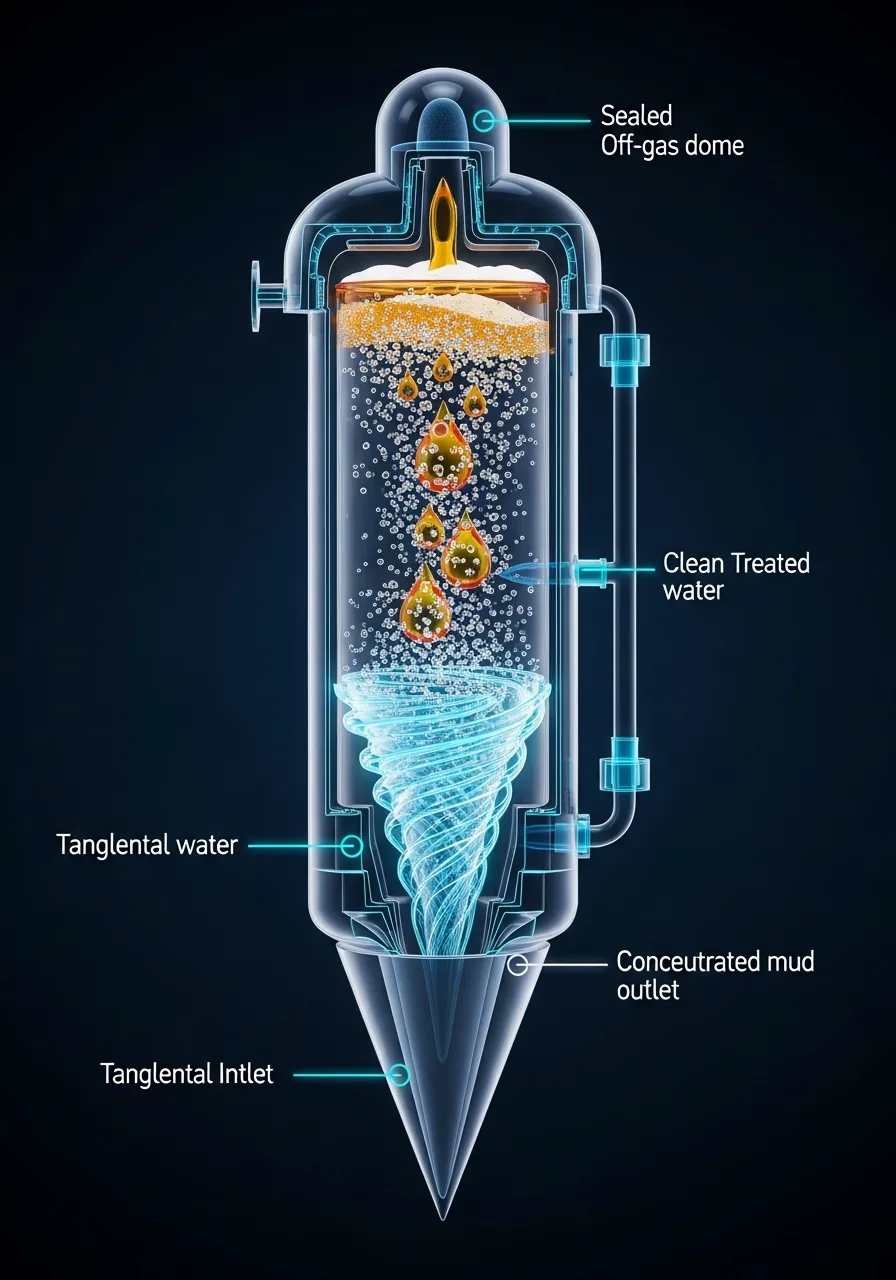
How CDOF Works: Catalytic Ozonation Meets Flotation
CDOF runs as a continuous, pressurized advanced oxidation process (AOP). Four stages — pressurized intake with ozone/catalyst dosing → catalytic reaction tank → hydrodynamic cavitation & flocculation → cyclonic dissolved-gas flotation & separation — turn ozone into a non-selective COD-destroying machine while simultaneously separating oil and solids.
Pressurized intake & ozone dosing
A booster pump drives the wastewater into the system under pressure and ozone is dosed into the feed line — forcing ozone into solution far more efficiently than open-tank contacting. The catalyst is fixed inside the reaction tank, not added to the influent stream.
Multi-stage catalytic ozonation
Inside the catalytic reaction tank, the fixed catalyst converts ozone into hydroxyl radicals (·OH, ~2.8 V oxidation potential). ·OH reaction rate constants are 10⁶–10⁹× higher than direct ozone oxidation, are non-selective, and fully mineralize organics. Ozone alone is selective and may generate persistent intermediates. The result: COD is destroyed 2–5× faster than ozone-only treatment.
Hydrodynamic cavitation & flocculation
The oxidized stream passes through a hydrodynamic cavitation device that intensifies mixing and seeds fine bubbles, and flocculant is dosed in to agglomerate emulsified oil and suspended solids ahead of flotation.
Cyclonic dissolved-gas flotation & separation
In the CDOF flotation column a stable cyclonic flow field releases 5–30 µm micro/nano bubbles that attach to oil droplets and flocs; centrifugal force concentrates them so floating sludge is skimmed off the top, concentrated sludge leaves via the bottom mud outlet, and decolorized, low-COD water exits as effluent — while ≥99.98% ozone utilization keeps the sealed off-gas essentially ozone-free.
How catalytic ozonation destroys COD
Catalysts convert ozone into hydroxyl radicals (·OH) — a near-universal oxidant with rate constants 10⁶–10⁹× higher than direct ozone oxidation — that mineralize refractory organics, while 5–30 µm micro/nano bubbles attach to oil droplets and flocs for flotation.
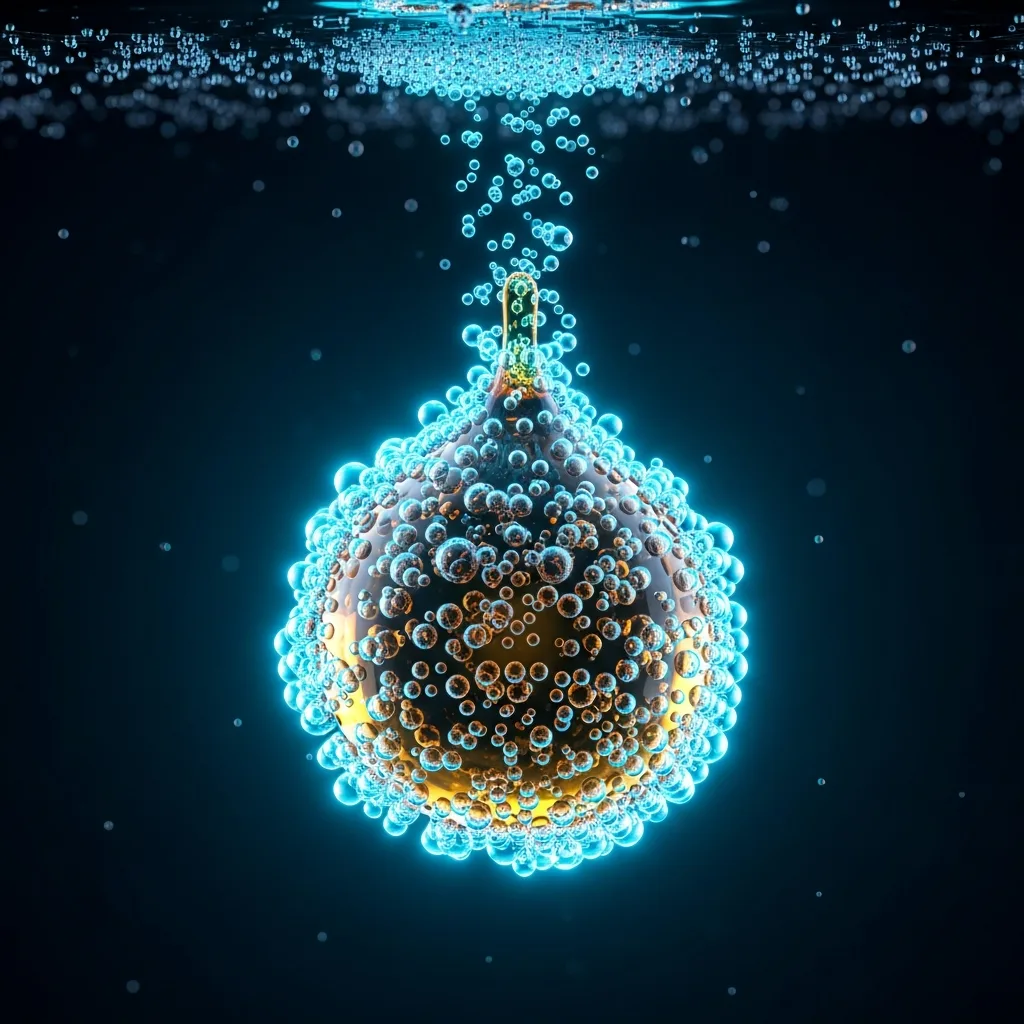
Micro & nano bubbles
do the lifting
The cyclonic flow field releases an exceptionally fine, dense cloud of 5–30 µm bubbles. Their enormous surface area and slow rise let them adhere to emulsified oil and flocculated solids, carrying them to the surface for skimming — separation and oxidation in one pass.
Before flotation, ozone and ·OH demulsify colloids: they oxidize surfactants and polymer stabilizers on particle surfaces, break down stabilizing macromolecules, and shift ζ-potential by altering surface charge — destabilizing the emulsion so micro-bubbles can capture and lift the freed particles. Micro-bubble collapse also generates localized high-pressure and high-temperature conditions that further reinforce oxidation.
Performance & Benefits
Pre-treatment (upstream of biology)
Deep COD removal (tertiary)
Refractory organics destroyed
90%+ decolorization & odor removal
Oil & suspended solids removal
Broad-spectrum cleanup & disinfection
Skid-mounted & fully automatic
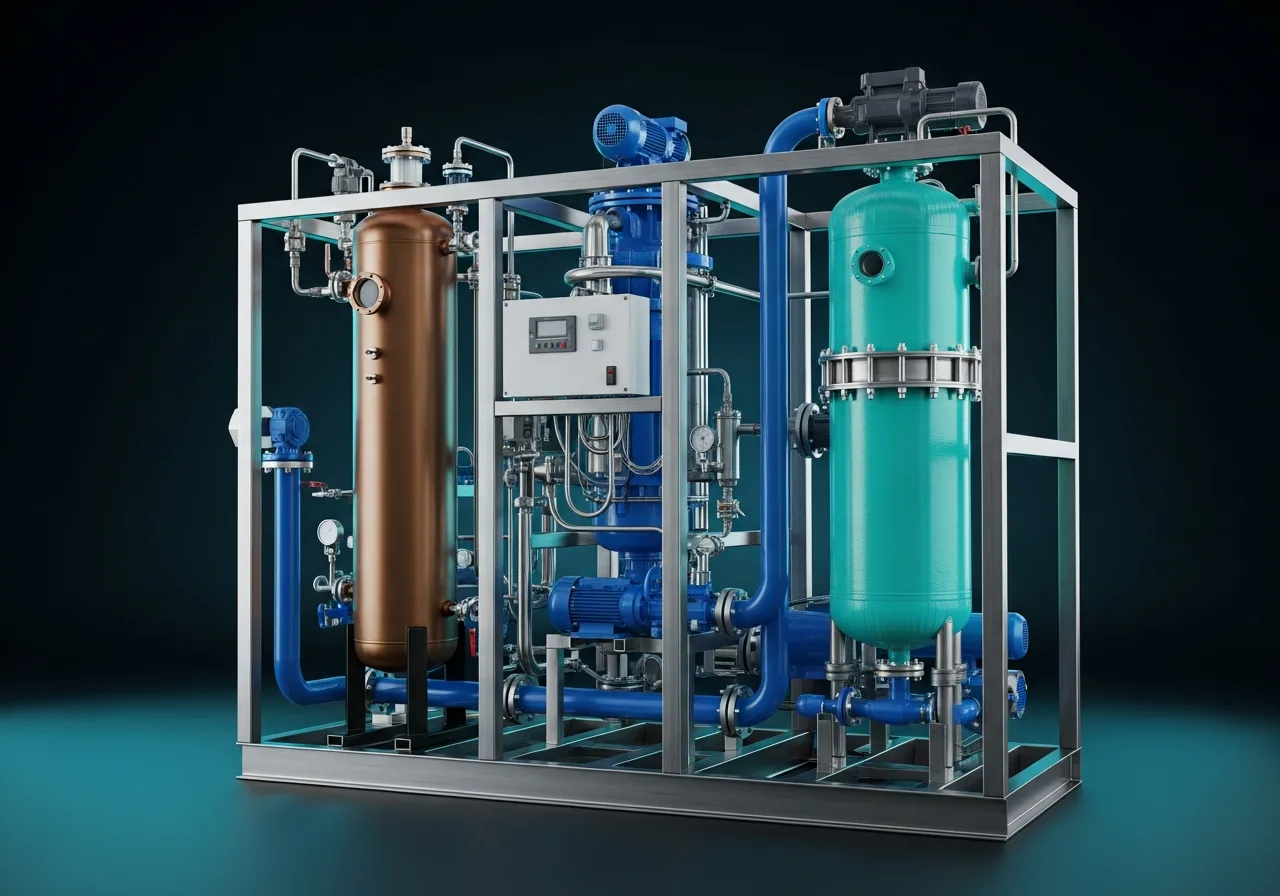
Skid-mounted CDOF unit
Fully enclosed, pressurized and pre-piped — delivered as a compact skid for fast install and commissioning.
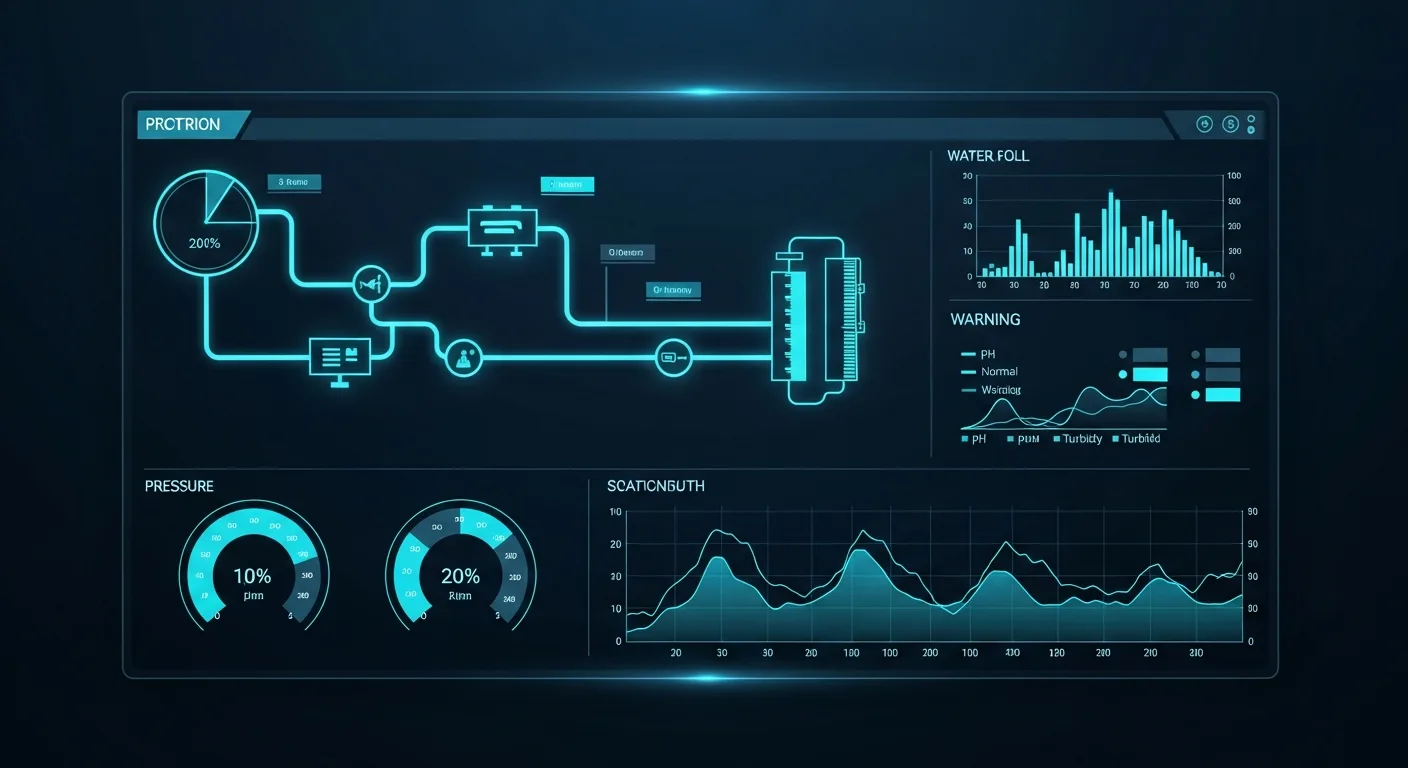
DCS/PLC automation
Real-time dosing, ozone and flotation control with full DCS/PLC monitoring for hands-off, low-labor operation.
Applications

Fracturing flowback & produced water
High-COD, heavily emulsified oil-and-gas streams; CDOF cuts color, COD and oil — pair with SFM filtration for reinjection-grade polishing or discharge.
Oilfield solutions
Refinery & petrochemical wastewater
Advanced/tertiary treatment of fluctuating refinery effluents and electric-desalting water.
Refinery solutions
Power-plant wastewater
Polishing of oily and process streams for safe reuse or discharge.
Power-plant solutions
Landfill leachate (ozone/AOP)
A proven CDOF application: deep COD and color reduction on one of the toughest waste streams.

Pharmaceutical wastewater
Destroys high-COD, refractory and bio-toxic organics.

Black & odorous water remediation
Restores color, clarity and odor toward surface-water Class IV targets.
CDOF is also a proven solution for coal-chemical wastewater (ZLD), coking, dyeing and papermaking effluents, and new-energy / ternary-precursor wastewater.
CDOF vs Conventional Methods
Dissolved air flotation only separates. Conventional ozonation wastes ≈20% of ozone, demands longer retention times, and requires a larger footprint. Fenton oxidation generates heavy iron sludge, consumes acid and alkali, and can leave a yellowish, unstable effluent. CDOF combines oxidation and separation in one compact, automated unit — without either trade-off.
Frequently Asked Questions
Dissolved ozone flotation (DOF), also called ozoflotation, dissolves ozone into water under pressure and combines catalytic oxidation with micro-bubble flotation. In one step it oxidizes dissolved and colloidal organics while floating off oil and suspended solids. KELIER's CDOF is the patented, skid-mounted cyclonic version.
DAF only floats and separates. DOF/CDOF adds catalytic ozone oxidation, so it also destroys dissolved organics (lower COD), removes color and odor, and disinfects.
Fenton creates large chemical-sludge volumes and a slightly colored, unstable effluent and is operation-heavy. CDOF generates no sludge, produces a colorless/odorless effluent, runs fully automatically, and reacts in ≤15 min vs ≥60 min.
The fixed catalyst converts ozone into hydroxyl radicals (·OH, ~2.8 V). ·OH reaction rate constants are 10⁶–10⁹× higher than direct ozone oxidation, making ·OH non-selective and capable of fully mineralizing refractory organics that ozone alone — which is selective and may leave persistent intermediates — cannot fully destroy. The result is COD destruction 2–5× faster than ozone-only treatment.
CDOF's multi-catalyst, pressurized design lowers the ozone-to-COD dosing ratio to roughly 0.5–1.2, versus 1.5–4 for conventional ozonation, at ≥99.9% ozone utilization.
Yes — CDOF is skid-mounted and fully enclosed, with about 1/5 the footprint of conventional ozonation and short build/commissioning time.
Yes — CDOF achieves 90%+ decolorization and removes odor, turbidity, phenols, sulfides and cyanides while disinfecting bacteria and viruses.
Ready to Cut COD and Color for Good?
Talk to KELIER, an experienced ozone flotation system supplier, about a skid-mounted CDOF unit sized for your stream — or book a pilot test on your own wastewater.